
Problem
Young learners can struggle to understand abstract scientific processes like how a seed becomes a plant when instruction relies too heavily on passive content like videos or explanations.
Process
Transformed dense pedagogical theory (Zone of Proximal Development) into a highly practical corporate framework.
Solution
I designed a scaffolded learning experience that moves students from guided understanding to independent application.
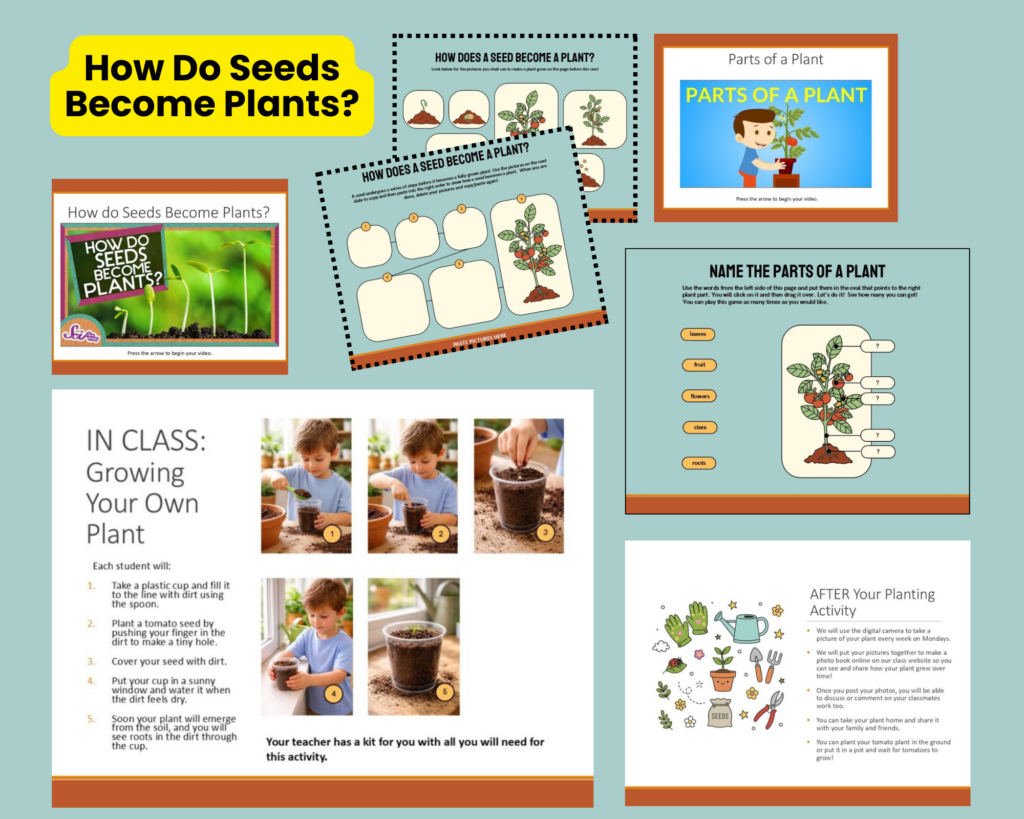
This learning experience was designed using Vygotsky’s Zone of Proximal Development (ZPD), where students move from what they can do independently to what they can do with guidance.
Through structured scaffolding which included modeling, interactive supports, and hands-on application, students gradually build their understanding of how a seed becomes a plant. Supports are intentionally reduced as learners gain confidence and independence.
This sample uses scaffolding by gradually removing prompts as learners progress.
Scaffolding Strategies Used
- Students first watch instructional videos which provide foundational knowledge before moving to the tasks.
- Interactive activities (drag and drop activities) provide structured support, allowing the students to practice with immediate feedback.
- Diagrams, labeled pictures, and step-by-step visual instructions reduce cognitive load and support comprehension.
- The students move from guided digital tasks to independent, hands-on planting, which allows them to apply the learning.
- Students share progress and discuss plant care and growth, learning from peers and extending understanding collaboratively.
| Stage | Student Support | Activity |
| High support | videos and visuals | learning plant parts |
| Moderate support | drag and drop interactive activity | identify parts of plant |
| Moderate support | sequencing activity | order plant growth |
| Low support | hands-on activity | plant a seed |
| Independent | reflection and sharing | documents growth |
This lesson demonstrates how digital and hands-on learning can work together to support students within their ZPD. By gradually removing supports, learners build confidence and independence. In future iterations, I would incorporate adaptive feedback or branching scenarios to further personalize scaffolding levels.
Ready to design learning that actually works?
Let’s build experiences that meet learners where they are—and move them forward.

Interactive plant activities courtesy of Canva templates.